
Best Cooking Classes in Lisbon 2026
- By André
- Education & Teaching
- cooking classes lisbon culinary experiences lisbon hands-on cooking lisbon medieval portuguese cuisine pasta making workshop Portuguese cooking workshops sushi workshop lisbon
New year, new culinary skills. If your 2026 resolution involves spending less time scrolling food videos and more time actually cooking, cooking classes in Lisbon offer the perfect starting point. From medieval Portuguese feasts to Japanese sushi precision, the city’s hands-on cooking classes transform kitchen intimidation into edible accomplishments.
Whether you’re a Lisbon local tired of the same weeknight dinners, a visitor wanting to take Portuguese flavors home, or simply someone who believes life’s too short for bad homemade pasta, these cooking workshops deliver skills you’ll actually use.
Why Cooking Classes Beat Recipe Videos
YouTube has infinite free cooking tutorials. So why pay for a cooking workshop in Lisbon?
The hands-on difference: Watching someone roll sushi versus having a chef adjust your hand position mid-roll are completely different learning experiences. You develop muscle memory, not just theoretical knowledge.
Immediate problem-solving: When your pasta dough feels wrong, the instructor fixes it on the spot. A video can’t tell you if you’ve added too much flour or explain why your dough isn’t coming together.
Cultural context: Learning Portuguese medieval cuisine from a chef who explains the historical significance of each ingredient connects you to centuries of culinary tradition in ways a recipe card never could.
Equipment access: Professional kitchens, proper sushi knives, traditional Portuguese cooking tools. You experiment with quality equipment before investing in your own.
The social element: Cooking classes create unexpected friendships. That couple struggling with the same pasta technique becomes your dinner party story for years.
The Best Cooking Classes in Lisbon for 2026
These three workshops represent the best of what Lisbon’s culinary scene offers in 2026, each delivering unique hands-on experiences that transform how you think about cooking.
Medieval Portuguese Cuisine Workshop for History Buffs and Culinary Time Travelers
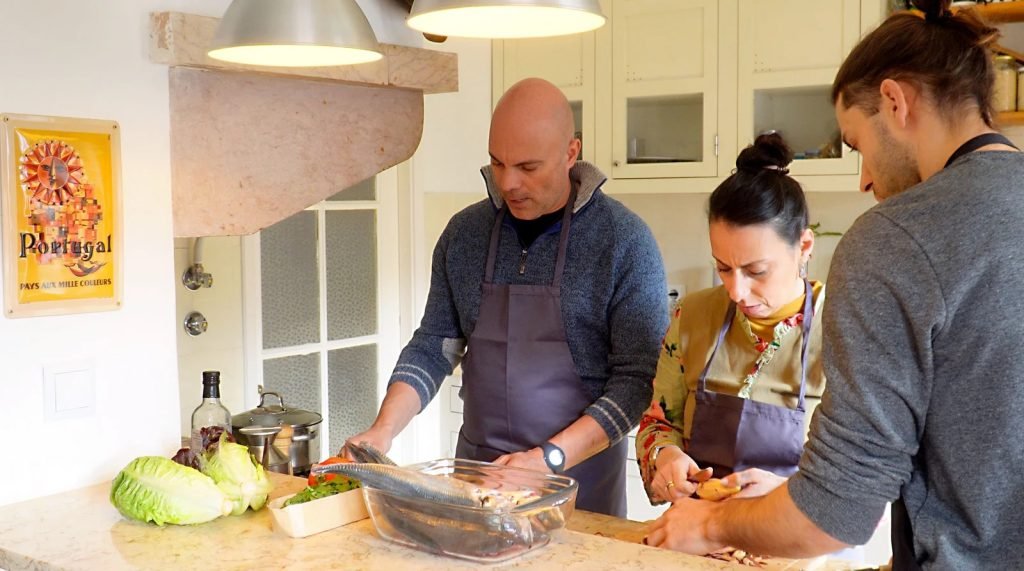
What makes it special: This isn’t “medieval-themed” cooking with invented recipes. This is authentic 13th-15th century Portuguese cuisine using only ingredients that existed before 1498, based on actual historical cookbooks and traveler accounts.
What you’ll cook:
🏰 Moelas Estufadas (Lisbon Tavern Gizzards): The favorite snack of 15th-century sailors and Coimbra students, slow-cooked with onions, garlic, bay leaves, and white wine exactly as tavern records describe
🏰 Transmontane Bacalhau with Chestnuts: Dried cod from Newfoundland cooked with crushed chestnuts, olive oil, and coriander as prepared in noble Douro and Minho houses during King João I’s reign
🏰 Nabada de Semide (Royal Turnip Sweet): Portugal’s most celebrated medieval dessert where cooked turnips are sweetened with Alentejo honey and perfumed with cinnamon and cloves, served at the tables of Kings Afonso V and João II
Why it’s brilliant: You’re not just learning recipes; you’re experiencing culinary archaeology. The chef explains the social dimensions of medieval Portuguese food culture: why gizzards were tavern favorites, how cod arrived before Brazil’s discovery, why turnip sweet graced royal banquet tables while chestnuts served as “bread of the poor.”
The experience: Work with period-accurate ingredients including dried cod, Douro chestnuts, garden turnips, rosemary honey, and spices from the India route. All ingredients, equipment, and a complete tasting with period-appropriate wine are included.
Perfect for:
✨ History enthusiasts
✨ Anyone curious about pre-Columbian European cuisine
✨ People seeking authentic historical experiences rather than modern recreations
✨ Students of culinary history
Unique factor: Some dishes like nabada de semide maintain unbroken preparation traditions from medieval times to present day in certain Portuguese villages. You’re connecting to living historical tradition.
Art and Pasta Workshop for Creative Souls Who Love Italian Cuisine

What makes it special: This workshop merges two art forms: handcrafted Italian pasta meets Portuguese azulejo tile painting. Led by Tiziana Lepore, an Italian artist and creator of Massazuleja, you’ll transform pasta into hand-painted edible art inspired by Portugal’s iconic tiles.
The concept: Each pasta piece becomes a delicate canvas celebrating azulejo artistry. This isn’t just cooking; it’s multisensory creative expression that honors both Italian culinary tradition and Portuguese decorative heritage.
What you’ll learn: The slow, thoughtful process of creating unique artisanal pasta using only natural ingredients. You’ll explore the connection between gastronomy and traditional tile painting while discovering why patience and individuality matter in both art forms.
Why it’s brilliant: Massazuleja represents a message of love for art, history, and nature. Each creation is genuinely unique, reflecting your personal artistic vision while celebrating the craftsmanship that connects Portuguese and Italian cultures.
The experience:
🍝 All ingredients provided
🍝 Friendly environment
🍝 Delicious snacks featuring Italian local products
Perfect for:
🎨 Creative individuals
🎨 Pasta lovers wanting to elevate their technique
🎨 People interested in cultural fusion
🎨 Anyone seeking a meditative cooking experience
🎨 Date night with an artistic twist
Unique factor: You’re not making standard pasta shapes. You’re creating edible art pieces that honor centuries of Portuguese azulejo tradition through Italian culinary craft.
Traditional Sushi Making Workshop for Precision Learners and Japanese Cuisine Lovers

What makes it special: A comprehensive hands-on workshop covering multiple sushi styles including nigiri, maki, and temaki. This goes beyond California rolls to teach authentic Japanese techniques with cultural context.
What you’ll master: Various sushi preparation methods under expert guidance. You’ll learn the fundamentals of rice preparation (the foundation of great sushi), proper knife techniques, fish handling, and the precise hand movements that separate amateur attempts from restaurant-quality results.
The cultural depth: Beyond technique, you’ll discover Japanese culinary traditions, sushi history, and the cultural insights behind this celebrated cuisine. Understanding why things are done certain ways transforms mechanical steps into meaningful practice.
Why it’s brilliant: Sushi is one of those cuisines that looks simple but depends entirely on precise execution. Having an expert correct your rice seasoning, demonstrate proper nigiri hand pressure, or explain why your maki rolls keep falling apart accelerates your learning dramatically.
The experience:
🍱 All ingredients and equipment provided
🍱 Complete meal and refreshments (water and green tea)
🍱 Certificate of completion
Perfect for:
🍣 Japanese cuisine enthusiasts
🍣 Anyone intimidated by sushi making at home
🍣 People who appreciate precision cooking
🍣 Food lovers wanting authentic cultural education alongside technique
Unique factor: Most people only eat sushi in restaurants. Learning to make it properly means you can recreate high-quality sushi at home, impressing dinner guests and satisfying cravings without the restaurant markup.
How to Choose Your Cooking Workshop
Match your learning style:
🎯 Historical context enthusiast → Medieval Portuguese Cuisine
🎯 Creative and artistic approach → Art and Pasta Workshop
🎯 Precision and technique focused → Traditional Sushi Making
Consider your cooking goals:
🎯 Want Portuguese cultural immersion → Medieval Portuguese Cuisine
🎯 Seeking Instagram-worthy results → Art and Pasta Workshop
🎯 Building specific technical skills → Traditional Sushi Making
Think about repeat value:
🎯 Historical recipes you’ll make for dinner parties → Medieval Portuguese Cuisine
🎯 Artisanal techniques for special occasions → Art and Pasta Workshop
🎯 Skills you’ll use regularly at home → Traditional Sushi Making
Factor in interest areas:
🎯 Love Portuguese history → Medieval Portuguese Cuisine
🎯 Appreciate visual arts → Art and Pasta Workshop
🎯 Fascinated by Japanese culture → Traditional Sushi Making
What to Expect from Lisbon Cooking Workshops
Duration: Most cooking workshops run 2.5 to 4 hours, giving you time to learn techniques, prepare dishes, and enjoy what you’ve created without rushing.
Group dynamics: Small class sizes mean personalized attention. You’re not lost in a crowd of 30 people; instructors can watch your technique and provide specific feedback.
Skill level: These workshops welcome beginners. No prior experience required. If you can follow instructions and aren’t afraid to get your hands messy, you’re qualified.
What’s provided: Ingredients, equipment, aprons, and usually the meal you’ve prepared. You show up, learn, cook, and eat. Some workshops include take-home materials or certificates.
Language: Most Lisbon cooking workshops operate in English or offer English-speaking instructors, making them accessible to international visitors and English-speaking residents.
Making the Most of Your Cooking Workshop
Come hungry, leave full: You’ll taste everything you make. Don’t eat a huge meal beforehand, but don’t arrive starving either, you need energy for standing and cooking.
Ask questions: Instructors expect questions. That’s the point. If you don’t understand why something’s done a certain way, ask. The cultural and technical context makes techniques stick.
Take notes mentally: While you’re hands-on cooking, pay attention to technique tips, ingredient ratios, and chef wisdom. These details are harder to replicate at home from memory alone.
Embrace mistakes: Cooking workshops are safe spaces to mess up. Your pasta dough too dry? Perfect learning opportunity. Your sushi rice too wet? The instructor will explain how to fix it.
Connect with classmates: Strike up conversations while chopping, stirring, or waiting for something to cook. Cooking workshops attract interesting people, and shared experiences create natural bonding.
Beyond the Workshop: Continuing Your Culinary Journey
Practice soon after: The best time to reinforce workshop learning is within a week. Make the same dish at home while techniques are fresh. Don’t wait months and forget everything.
Adapt to your kitchen: Workshop kitchens have professional equipment. At home, adapt techniques to your tools. The sushi instructor’s advice about knife technique applies even if your knife isn’t Japanese steel.
Share what you learned: Cooking for friends or family after a workshop solidifies your skills and makes the investment tangible. That medieval Portuguese feast becomes your signature dinner party menu.
Build on foundations: Each workshop provides building blocks. Medieval cooking teaches you about layering flavors with limited ingredients. Sushi workshops develop knife skills and precision. Pasta workshops strengthen your understanding of dough.
Why 2026 Is Your Year to Learn Cooking
New year resolutions fail when they’re vague (“eat better”) or punishing (“never eat out”). Learning to cook through workshops is concrete, enjoyable, and immediately rewarding.
You’re not restricting yourself; you’re expanding capabilities. That Portuguese medieval feast, handcrafted pasta, or perfectly rolled sushi becomes part of your repertoire. These aren’t tricks you’ll forget, they’re skills that compound.
Plus, cooking workshops in Lisbon combine learning with cultural experiences. You’re not just acquiring techniques; you’re connecting with Portuguese history, Italian artistry, or Japanese traditions through their most intimate expression: food.
The workshops above represent different pathways into culinary confidence. Medieval Portuguese cuisine grounds you in centuries of tradition. Art and pasta merge creativity with technique. Sushi making demands precision and rewards it with restaurant-quality results.
Pick the one that excites you most. Block the time. Show up ready to learn. By February, you’ll have a new skill that transforms ordinary weeknights into something special.
Your 2026 resolution shouldn’t be cooking less takeout. It should be cooking more things that make you proud to serve.
Ready to start your culinary journey? Browse all cooking workshops in Lisbon and find the perfect class to kick off your 2026.

 uk english
  pt portuguese