
How to Keep Your New Year’s Resolutions in 2026 (Hint: It’s Not Willpower)
- By André
- Community Experiences
- experience workshops habit formation hands-on learning Portugal New year's resolutions personal development workshops resolution success tips
Every January, millions of people wake up determined to transform their lives. Lose weight. Learn something new. Be more creative. Find balance. The intentions are genuine, the motivation is real, the commitment feels absolute in those first days of January.
But by February, 80% of New Year’s resolutions have already failed.
The gym membership sits unused. The language app gathers digital dust. The journal remains mostly blank. The resolution to “be more present” dissolved the first time your phone buzzed with a notification you couldn’t ignore.
The problem isn’t you. Your lack of follow-through isn’t a character flaw. The problem is that we’ve been approaching resolutions completely wrong, fighting against human psychology instead of working with it.
Why Most New Year’s Resolutions Fail (The Science)
Research from the University of Scranton reveals a sobering truth: only 8% of people achieve their New Year’s goals. By the second week of February, most resolutions are abandoned, forgotten, or transformed into vague guilt that lingers until next January when we promise ourselves “this year will be different.”
Except it rarely is. Because we keep using the same broken strategy.
But why do we fail so consistently?
🧠 Willpower is a finite resource that depletes throughout the day. Psychologist Roy Baumeister’s groundbreaking research on ego depletion shows that willpower functions like a muscle that gets tired with use. Every decision you make, every temptation you resist, every impulse you control draws from the same limited pool of mental energy. Relying purely on self-discipline to change behavior is like trying to run a marathon on sheer determination alone, no training required, no strategy, just raw grit. It works for almost no one.
📝 Abstract goals lack the concrete action steps your brain needs. “I want to be more creative” or “I need to reduce stress” are beautiful intentions but terrible plans. These vague aspirations don’t tell your brain what to actually do, when to do it, or how to measure progress. Without specificity, your resolution remains a wish rather than becoming a practice. The brain craves clear, actionable steps, not philosophical aspirations that sound good but provide no roadmap.
⏰ Delayed gratification doesn’t motivate us the way we think it should. Neuroscience tells us that our brains are fundamentally wired for immediate rewards. The promise of being healthier in six months, more skilled in a year, or financially secure in a decade doesn’t trigger the same dopamine response as eating chocolate right now, scrolling social media this minute, or skipping the workout today. Our brains discount future benefits dramatically, which means resolutions based entirely on delayed rewards are fighting an uphill neurological battle.
🔄 Missing environmental triggers and structural support doom even strong intentions. Most resolution advice focuses obsessively on internal motivation while completely ignoring the powerful role of external environments and social structures. We dramatically underestimate how much our surroundings, our schedules, our social circles, and our environmental cues shape our behavior. Willpower alone can’t overcome an environment designed for the exact opposite of your goals.
💭 The intention-action gap is wider than we admit. Having a clear intention to change and actually changing are separated by an enormous chasm that positive thinking can’t bridge. Studies show that while 77% of people maintain their resolutions for the first week, by the end of the second week, fewer than half are still on track. The drop-off is precipitous because intentions, no matter how sincere, don’t automatically translate into behavior change.
The traditional resolution model sets us up for failure because it relies on the exact opposite of what behavioral science tells us actually creates lasting change: experience, commitment, environmental design, and immediate rewards rather than pure willpower and abstract goals.
Why Experiences Create Better Habits Than Intentions
Here’s what actually works: booking an experience instead of making a promise to yourself.
When you sign up for a pottery workshop, a cooking class, or a surf lesson, something fundamentally different happens in your brain and your schedule compared to simply deciding you’ll “try pottery sometime” or “cook more this year.”
This isn’t motivational fluff. This is behavioral psychology applied to real life.
💳 Financial commitment creates psychological investment that abstract promises can’t match. Once you’ve paid for something, the pain of loss kicks in powerfully. Behavioral economists call this the “sunk cost effect,” and while it can be irrational in some contexts (like staying in a bad movie because you paid for the ticket), it’s incredibly useful for habit formation. You’ve literally put money where your mouth is. Your brain now has skin in the game. The €50 or €80 you’ve spent becomes a psychological anchor that makes you show up even when motivation wanes. You’re not just breaking a promise to yourself anymore; you’re wasting actual money.
📅 Calendar blocking forces prioritization and eliminates decision fatigue. A workshop date in your calendar isn’t a vague intention floating in the ether of “someday.” It’s a concrete appointment with yourself, scheduled and unavoidable. You’re not hoping to find time; you’ve created it. You’re not relying on future motivation; you’ve made the decision in advance. This is enormous because it removes the daily negotiation with yourself about whether today is the day you’ll finally start. The decision has already been made. Your future self just has to show up.
👥 Social accountability amplifies commitment in ways private resolutions never can. Most workshops involve other people: instructors who expect you, classmates who’ll notice your absence, a community forming around shared experience. Unlike your private resolution that only you know about (and therefore only you will know if you break), you’re now part of a small social structure. Social psychology research consistently shows we’re far more likely to follow through on commitments when others are involved, not because we’re performative, but because we’re fundamentally social creatures who respond to group expectations and shared experiences.
✨ Immediate gratification satisfies the dopamine system your brain actually has, not the one motivational posters wish you had. Instead of waiting months to feel the benefits of your resolution, you get instant reward: the tactile satisfaction of creating something with your hands, the endorphin rush of learning a new skill, the sensory pleasure of tasting food you’ve prepared yourself, the dopamine hit of visible progress. This immediate positive reinforcement is exactly what your brain needs to build motivation for continued practice. You’re not fighting your neurology; you’re leveraging it.
🎯 Skill progression creates natural momentum through the progress principle. After your first ceramics class, you’re not a master potter, but you’re also no longer a complete beginner. You’ve crossed a threshold. You know how clay feels, how the wheel spins, how pressure creates form. Psychologists call this the “progress principle”: once we see tangible progress, we’re exponentially more motivated to continue. Each workshop builds competence, and competence builds confidence, and confidence builds desire to practice more. The positive feedback loop activates naturally.
🧩 Experiential learning bypasses the planning paralysis that kills most resolutions. When your resolution is “learn to cook,” you face infinite choice: what cuisine, what recipes, what equipment, what techniques? This overwhelm leads to inaction. When you book a pasta-making workshop, all those decisions are made for you. You just show up. The structure is provided. The learning happens automatically. You’re doing instead of planning to do.
Think about it this way: saying “I want to cook more this year” requires daily willpower, daily decisions, daily motivation to overcome the easier option of ordering takeout. Booking three cooking workshops throughout Q1 requires one moment of decision that creates three guaranteed experiences. You’ve designed your environment for success instead of relying on motivation that fluctuates wildly based on your stress levels, energy, and what happened at work that day.
The “Commitment Through Booking” Method
Let’s get practical. Here’s the framework that actually works for keeping resolutions through experiences:
🎯 Step 1: Transform vague resolutions into experience categories
This is where most people stay stuck. Your resolution is probably something like “be more creative,” “take better care of myself,” “learn new things,” or “reduce stress.” These are outcomes, not actions.
Drill down into what these actually mean for you specifically:
“Be more creative” might mean: Learn to work with your hands? Express yourself artistically without judgment? Try something completely new where you’re a beginner again? Connect with Portuguese cultural traditions? Make things instead of just consuming things?
“Take better care of myself” might mean: Move your body in ways that feel good rather than punishing? Cook nourishing food that you actually enjoy? Find practices that quiet your mind? Create boundaries around work and rest?
“Learn new things” might mean: Develop practical skills you can use? Understand traditional crafts and techniques? Challenge yourself intellectually? Connect with makers and artisans?
“Reduce stress” might mean: Find activities so absorbing that anxious thoughts can’t compete? Create regular non-screen time? Engage your senses and get out of your head? Build practices that create calm rather than just trying to eliminate stress?
Get specific about the underlying need your resolution is trying to address. This clarity will help you choose experiences that actually satisfy what you’re craving.
3️⃣ Step 2: Choose 3 experiences for Q1 2026 (January-March)
This is the magic number, and it’s not arbitrary. Three workshops give you:
Enough variety to discover what genuinely resonates with you versus what sounds good in theory
Sufficient spacing to integrate what you learn without overwhelming yourself
Low enough commitment to feel psychologically achievable (not the ambitious “12 new things in 12 months” that sounds exciting in December but feels exhausting by February)
High enough frequency to build actual momentum rather than having one workshop become a isolated memory
Natural data points to evaluate what you want more of and what you’re ready to release
The Q1 timeframe is also strategic. These first three months set the tone for your year. They’re when motivation is naturally highest. Use this window wisely by creating structured experiences rather than abstract goals.
🔒 Step 3: Book them all at once (this is non-negotiable)
Don’t wait to see how the first one goes. Don’t tell yourself you’ll book the second one after you’ve tried the first. Book all three in one sitting, right now.
This single decision eliminates three future moments of potential procrastination, self-doubt, or changed circumstances. You’re making one choice that creates three guaranteed outcomes. Future you doesn’t have to find motivation; future you just has to honor a commitment present you already made.
This feels counterintuitive. We want to be flexible, to see what we like, to not over-commit. But this hedging is exactly what undermines resolutions. The booking itself is the commitment device that makes everything else possible.
⚖️ Step 4: Vary intensity and commitment levels strategically
Don’t book three identical experiences. Create a progression:
One quick taster session (2-3 hours) for something completely new where you have no idea if you’ll enjoy it. Low risk, low time investment, high potential for discovery. This is your experimental slot.
One half-day or full-day deep dive into something that genuinely intrigues you, where you suspect there’s real interest but you want to go beyond surface level. This is your exploration slot.
One multi-session course (3-6 weeks) to genuinely develop a skill and see what consistent practice feels like. This is your commitment slot where you’ll learn whether this is a passing interest or something that could become part of your life.
This variety protects you from both under-committing (trying things so briefly you never get past awkward beginner phase) and over-committing (signing up for 8 weeks of something you end up hating).
📓 Step 5: Build in reflection time after each experience
This is the step most people skip, and it’s why workshops remain isolated events rather than becoming gateways to sustained practice.
After each workshop, within 24 hours while the experience is still fresh, spend 15 minutes with these questions:
What surprised me about this experience? (Often what surprises us reveals what we’re actually seeking)
Do I want to continue this practice? (Honest answer, not what you think you should want)
What would I need to do this regularly? (Equipment, space, time, money, get specific about barriers)
How did this make me feel physically and mentally? (Track your actual state, not your idea of what the activity should provide)
What did this teach me about what I’m seeking? (Sometimes a pottery class teaches you that you don’t actually want to make pottery; you want meditative focus, which you might find elsewhere)
This isn’t just feel-good journaling. You’re gathering data about yourself to make increasingly better decisions about where to invest your limited time and energy. You’re treating yourself like a scientist gathering evidence rather than a motivational speaker pumping yourself up with empty affirmations.
Matching Workshops to Your Actual Resolution
The key is choosing experiences that address the underlying need your resolution is trying to meet. Here’s how to translate common resolutions into workshop experiences that actually work:
💪 If Your Resolution is Physical Wellness
Maybe you’re tired of gym memberships you never use, or you want to move your body in ways that feel joyful rather than punishing. Maybe “getting in shape” has always felt like a chore, and you’re looking for movement that doesn’t feel like work.
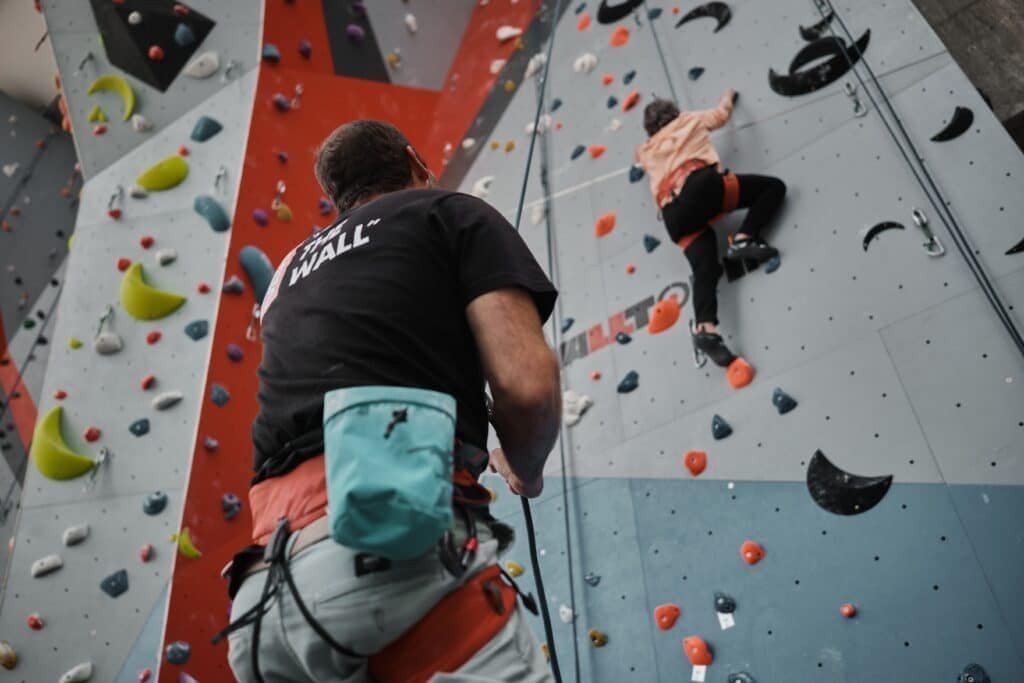
Workshops that work:
🌊 Surf lessons on Portuguese beaches turn fitness into adventure. You’re learning a skill, connecting with the ocean, and getting a full-body workout without once thinking “I’m exercising.” The physical challenge is embedded in something inherently rewarding. Beginners start with beach instruction and foam boards in gentle waves, the barrier to entry is lower than you think. By your third session, you’ll understand why people become obsessed with this practice.
🧘 Yoga workshops (not drop-in classes, actual workshops that teach specific practices) give you techniques you can take home. A workshop on morning flows, restorative sequences for stress, or yoga for better sleep provides structured learning rather than just showing up to follow along. You leave with knowledge, not just a workout.
🌿 Foraging and wild cooking experiences combine gentle movement through nature with sensory engagement and practical skills. You’re walking, yes, but you’re learning to identify edible plants, understand ecosystems, and prepare wild foods. The physical activity is secondary to the adventure.
🥖 Breadmaking courses involve more physical work than you’d expect: kneading, shaping, stretching dough. The rhythmic movements are meditative, the timing creates structure, and the tangible results satisfy that need for visible progress. Plus, you’re learning a practical skill that nourishes both body and soul.
🎨 If Your Resolution is Creative Expression
Maybe you’ve been consuming content endlessly but creating nothing. Maybe you miss working with your hands. Maybe you want to express yourself but don’t know where to start. Maybe you’re tired of the perfectionism that keeps you from trying anything new.
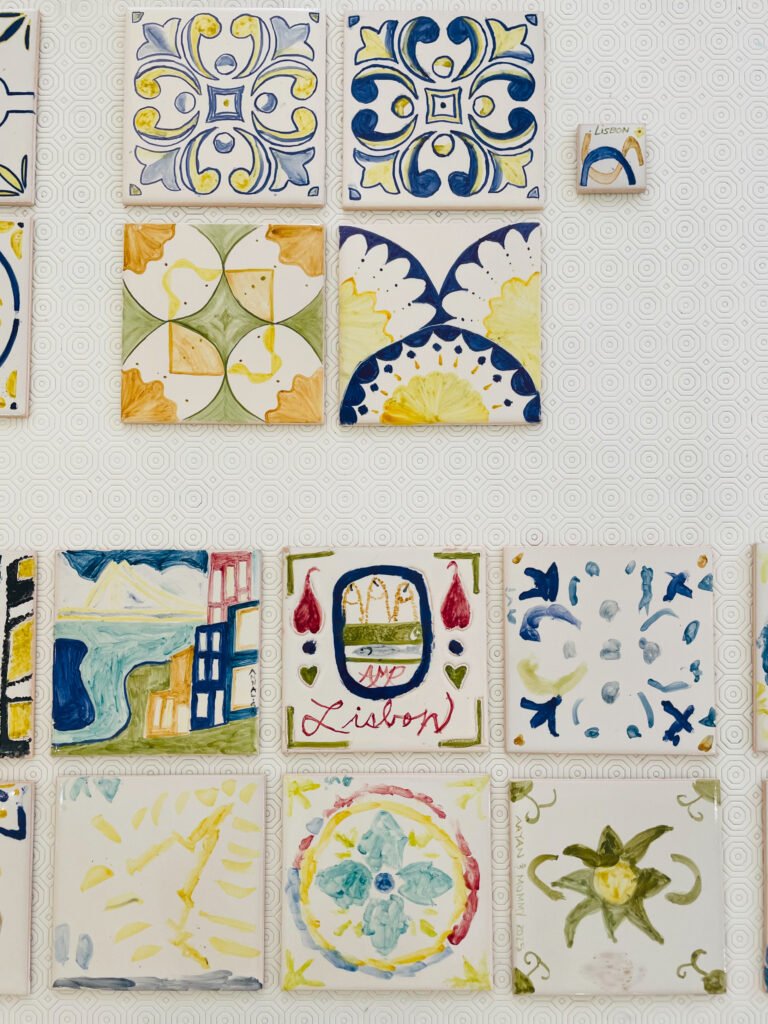
Workshops that work:
🏺 Pottery throwing or hand-building workshops are deeply tactile, immediately rewarding, and impossible to do while distracted by your phone. Clay responds to pressure, moisture, and time, you have to be completely present. There’s something primal and satisfying about shaping earth into form. Start with a wheel-throwing taster to experience the iconic pottery wheel, or try hand-building if you prefer more control and less mechanical skill initially.
🇵🇹 Portuguese azulejo painting workshops connect you to centuries of cultural heritage while teaching specific artistic techniques. The constraints of traditional patterns remove the paralysis of “what should I make?” while still allowing personal expression. You’re learning historical methods while creating something uniquely yours. The structured nature makes it perfect for people who claim they’re “not artistic.”
🧵 Natural textile dyeing workshops blend chemistry, color theory, and wearable art. You’re extracting colors from plants, understanding how different fabrics absorb dyes, and creating one-of-a-kind pieces. The science grounds the creativity for analytical minds.
🍝 Pasta-making workshops are creativity through food. You’re learning traditional techniques, experimenting with shapes and fillings, and getting immediate edible feedback on your creations. The low stakes (even imperfect pasta tastes good) make it psychologically safe to experiment.
🧠 If Your Resolution is Mental Wellness
Maybe you’re burnt out from constant connectivity. Maybe anxiety has been running your life. Maybe you need practices that create actual calm rather than just reading about mindfulness. Maybe you’re tired of wellness advice that requires waking up at 5am and meditating for an hour.
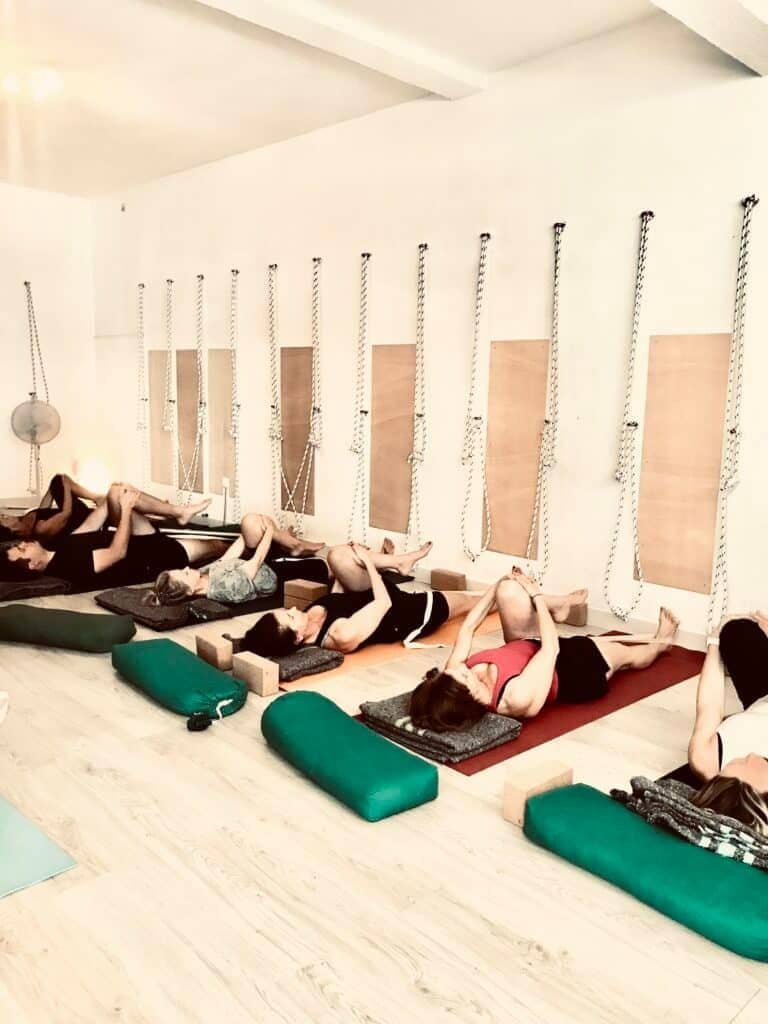
Workshops that work:
🥘 Mindful cooking classes create meditation through preparation. When you’re chopping vegetables with intention, measuring spices with care, and engaging all your senses in the cooking process, anxious thoughts struggle to compete. The mindfulness happens naturally as a byproduct of the activity rather than as a forced practice.
🪴 Ceramics courses offer focus so intense that anxiety physically can’t maintain its grip. The concentration required to center clay on a wheel or build a structurally sound hand-built piece creates what psychologists call “flow state”, complete absorption that naturally crowds out rumination and worry.
🌸 Floral arrangement workshops combine nature connection with aesthetic practice and present-moment focus. You’re working with color, texture, shape, and ephemeral beauty. The practice is inherently calming, the results bring beauty into your space, and the skills transfer to appreciating beauty in everyday life.
🍷 Wine and food pairing experiences teach you to engage your senses fully, distinguishing subtle flavors and aromas. This sensory education pulls you completely into the present moment, you can’t truly taste while simultaneously worrying about tomorrow’s meeting.
🌍 If Your Resolution is Connection & Social Life
Maybe you’re tired of shallow digital connections. Maybe you’ve realized your social life has shrunk to work colleagues and social media. Maybe you want to meet people who share actual interests rather than just proximity. Maybe you’re in a relationship that’s become routine and you want shared experiences that create connection.
Workshops that work:
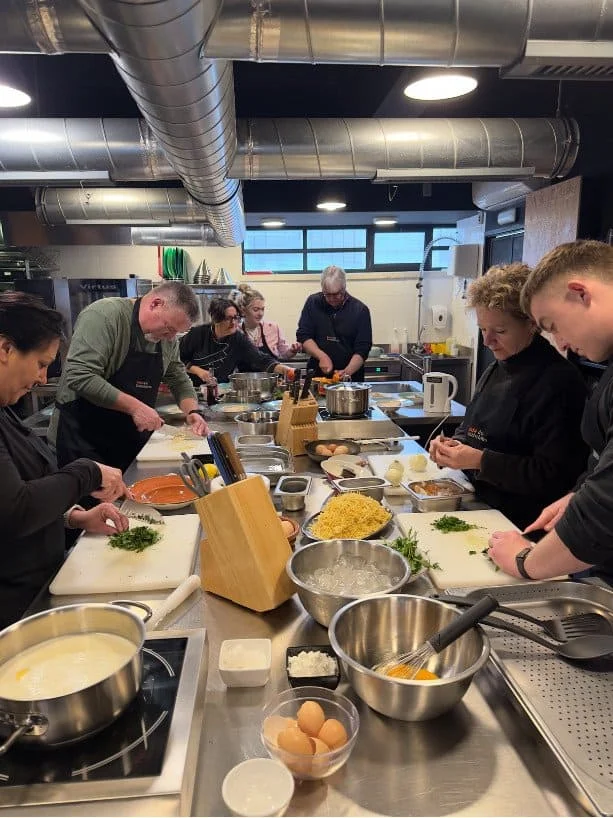
👨🍳 Group cooking experiences create natural conversation through collaboration. You’re working toward a shared goal, helping each other with techniques, and ultimately sharing a meal together. The activity provides both structure and spontaneity for connection.
🎭 Traditional craft workshops connect you with artisans who’ve dedicated their lives to their practice, and with fellow learners who value the same skills you’re discovering. These communities often extend beyond the workshop itself into ongoing practice groups and craft circles.
🥂 Couples workshops give you and your partner shared experiences that create memories and inside jokes. Cooking together, throwing pottery together, or learning a new skill side-by-side activates different relationship dynamics than dinner-and-a-movie date nights.
🍣 Sushi-making classes require precision work that demands presence and often partner cooperation. The focused nature of the craft creates space for connection without the pressure of forced conversation.
📚 If Your Resolution is Learning & Growth
Maybe you’re bored with your expertise and want to be a beginner again. Maybe you’re curious about traditional skills being lost to industrialization. Maybe you want to understand how things are actually made rather than just consuming finished products. Maybe you’re craving knowledge you can hold in your hands.

Workshops that work:
🧀 Cheesemaking workshops teach you food science, microbiology, and ancient preservation techniques. You’re learning why temperature matters, how cultures transform milk, and how patience creates flavor. The knowledge is both intellectual and practical.
📸 Photography walks help you see your familiar city with new eyes. You’re learning composition, light, and perspective while documenting life with intention. The skill compounds over time as you notice more.
🌾 Fermentation courses dive deep into microbiology, chemistry, and culinary tradition. You’re learning to work with living cultures, understanding how salt and time create transformation, and developing a practice that connects you to food traditions spanning millennia.
🍰 Pastry masterclasses teach precision, technique, and the science of baking. You’re learning why ratios matter, how temperatures affect texture, and developing skills that impress at every dinner party while understanding the “why” behind every step.
Why This Works When Willpower Doesn’t
The fundamental difference between “I should exercise more” and “I’ve booked three surf lessons in Q1” is the difference between hoping for change and engineering it.
You’re not relying on future motivation that may or may not materialize. You’re using present-moment decision-making when motivation is highest (right now, reading this, excited about the new year and full of possibility) to create future obligations that your brain will honor even when motivation inevitably fluctuates.
You’re not fighting your nature or trying to become a different person. You’re working with how humans actually function: we honor commitments we’ve made public and financial, we’re motivated by immediate rewards more than distant goals, we learn better through doing than through reading or planning, we need structure to overcome decision fatigue.
You’re not setting yourself up to fail with unrealistic expectations. Three workshops in three months is genuinely achievable regardless of how busy you are. It’s specific enough to be actionable. It’s measurable (did you go or not?). It creates natural checkpoints for reflection and adjustment rather than arriving at December wondering where the year went.
You’re building identity through action rather than aspiration. Every workshop you attend moves you incrementally from “someone who wishes they were creative” to “someone who takes pottery classes.” The identity shift happens through accumulated evidence, not positive affirmations.
You’re creating memories and milestones that make the year feel lived. Even if you don’t continue any of these practices long-term, you’ll have experiences that mark Q1 2026 as a time you tried things, learned about yourself, and lived intentionally rather than reactively.
The secret isn’t having more willpower than other people. The secret isn’t being more disciplined or more motivated. The secret is needing less willpower entirely because you’ve designed a system that works with human psychology instead of against it.
Your Action Plan (Do This Today)
This isn’t information for later. This is your implementation guide for right now.
Within the next hour:
✅ Choose which category of resolution matters most to you right now (physical, creative, mental wellness, connection, or learning)
✅ Select three workshops from that category: one taster, one deep dive, one multi-session course
✅ Check your calendar for Q1 2026 and block out time for each before checking availability
✅ Book all three workshops in one sitting
✅ Add calendar reminders for one week before each workshop
✅ Tell one person what you’ve booked (external accountability activates)
Before each workshop:
✅ Review what you’re hoping to discover from this experience
✅ Set intention without attachment to outcome (curiosity over performance)
✅ Prepare any materials or logistics so day-of friction is minimized
After each workshop:
✅ Spend 15 minutes with the reflection questions from Step 5
✅ Identify one small action you could take to continue practice if you enjoyed it
✅ Update your Q2 plans based on what you’ve learned about yourself
By end of Q1:
✅ Evaluate which practices you want to continue, which taught you what you needed to know, and which revealed new directions entirely
✅ Book your Q2 experiences based on actual data about yourself rather than abstract resolutions
This isn’t a year-long commitment. It’s a three-month experiment with built-in learning checkpoints. You’re giving yourself permission to try, to learn, to adjust course based on reality rather than stubbornly pursuing goals that don’t actually serve you.
The Truth About Resolutions
Most resolution advice treats you like you lack discipline when actually you lack strategy. It assumes you need more motivation when actually you need better systems. It suggests you’re failing when actually the traditional approach to resolutions is failing you.
The people who successfully transform their lives aren’t superhuman. They’re not more disciplined or more motivated. They’ve simply learned to engineer environments and commitments that make desired behaviors easier than undesired ones.
Booking workshops isn’t giving up on willpower; it’s acknowledging that willpower is valuable and finite and should be reserved for decisions that truly require it. Why waste willpower on daily negotiations about whether today is the day you’ll start that new habit when you could make one decision that creates three automatic experiences?
This approach works because it aligns with how change actually happens: through small, repeated actions that build competence and confidence, not through dramatic declarations and white-knuckled determination.
Book your three Q1 experiences today. Not tomorrow when you have more time to research. Not next week when you know your schedule better. Not after you “see how January goes.”
Right now. While the motivation is fresh and the year feels full of possibility.
Because the difference between people who keep resolutions and people who don’t isn’t character, discipline, or willpower.
It’s strategy.
And now you have one that actually works.
Ready to transform your resolutions from abstract wishes into concrete experiences? Browse workshops in Lisbon, Porto, and across Portugal that turn your intentions into action.

 uk english
  pt portuguese