
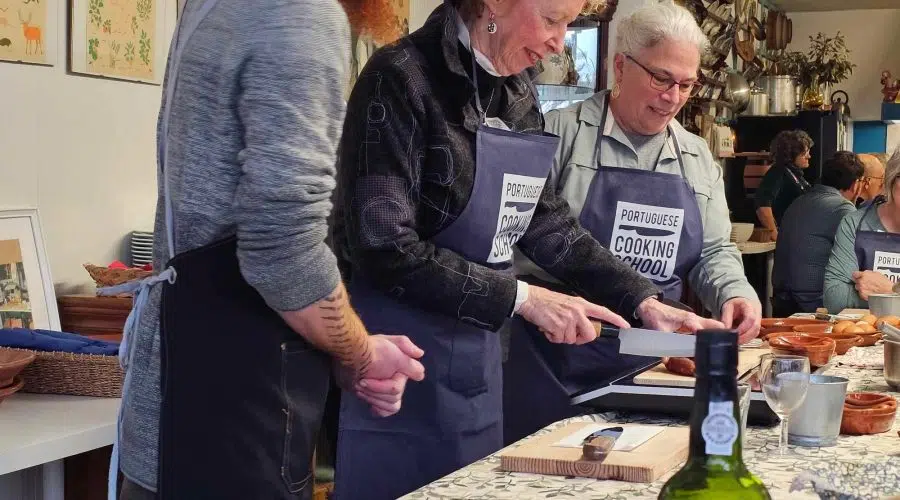
Sustainable and Traditional Portuguese Cooking Workshops
- By André
- Community Experiences
- cooking classes portugal farm to table portugal fermentation workshop Portuguese cooking workshops portuguese food culture sustainable cooking traditional portuguese cooking
Resumo rápido
Three Portuguese cooking workshops across Lisbon, Porto, and Évora teaching traditional recipes and sustainable food practices through fermentation with Sara Di Rocco, a private market-to-table session with Hugo Araújo, and farm-harvested Alentejo cooking with Sofia Vieira.
Sustainable and Traditional Portuguese Cooking Workshops
Key Takeaways
✅ Portuguese cooking workshops combine traditional recipes with sustainable ingredients sourced locally and seasonally
✅ Fermentation workshop in Lisbon teaches kombucha, kimchi, sourdough and pickles with Sara Di Rocco
✅ Private market tour and cooking class in Porto with Hugo Araújo covers authentic regional cuisine
✅ Farm to table experience in Évora with Sofia Vieira cooks seasonal vegetables harvested from her own farm
Portuguese cooking workshops teach the country’s food culture from the inside out, starting where the food actually comes from. Portuguese cuisine built its identity on seasonal local ingredients, traditional preservation techniques, and recipes passed through generations without written documentation. The market visit before cooking, the farm harvest before the kitchen, and the fermentation culture maintained across weeks rather than bought from a shelf: these practices define authentic Portuguese food culture in a way restaurant menus and recipe books cannot transmit.
Sustainable and traditional Portuguese cooking share the same foundation. Seasonal ingredients sourced locally, fermentation preserving harvests through winter, convent recipes using every part of what the garden produces: the traditional Portuguese approach to food was sustainable long before sustainability became a framework. These workshops teach that foundation directly, through fermentation science in a Lisbon home kitchen, market ingredient selection in Porto, and farm-harvested vegetable cooking in Évora.
Quick Overview
We’ve selected three Portuguese cooking workshops teaching traditional recipes and sustainable food practices across Lisbon, Porto, and Évora. From fermentation fundamentals and market-to-table cooking to farm-harvested seasonal meals, these experiences provide genuine Portuguese culinary education rooted in local ingredients and traditional methods.
All three include expert chef or host guidance, complete ingredients and equipment, finished meals or take-home ferments, and recipe cards enabling continued independent practice. Sessions range from hands-on fermentation covering four techniques to private Porto market tours and farm-harvested Alentejo cooking experiences.
1. Fermentation Workshop: Kombucha, Kimchi, Sourdough and Pickles

Fermentation Workshop with Sara Di Rocco in Lisbon covers four of the most rewarding and genuinely useful fermentation projects in a single hands-on session: kombucha, kimchi, sourdough, and naturally fermented pickles. Everyone leaves with their own sourdough starter, homemade pickles, homemade kimchi, and a SCOBY for kombucha brewing, plus a digital recipe card covering everything from the session. Takes place at Sara’s home in Lisbon. Tea, coffee, and other beverages provided throughout.
Session explores techniques, ingredients, and principles behind each fermentation method giving genuine understanding of what is happening in each process rather than just recipes to follow. Fermented foods rich in beneficial bacteria support gut health, digestion, immunity, and overall wellbeing. Sara also offers private workshops and team-building experiences for groups, companies, and special occasions.
Hands-on practice across all four fermentation projects, tea and coffee throughout, sourdough starter, homemade pickles and kimchi, optional SCOBY for kombucha brewing, and digital recipe card included.
Why it’s perfect for Portuguese cooking workshops: Fermentation sits at the heart of traditional Portuguese food preservation, and learning four techniques simultaneously gives participants the practical foundations for sustainable home food production that supermarket buying never develops.
2. Private Portuguese Cooking With Market Tour: Porto

Private Portuguese Cooking Workshop with Market Tour with Hugo Araújo in Porto offers four-hour private culinary experience at 80 euros per person beginning with guided local market walk before moving into private cooking session combining authentic Porto food culture with hands-on traditional Portuguese meal preparation from scratch. Hugo brings over 13 years hospitality experience and five years specialising in culinary workshop experiences from intimate sessions to large-scale team building, having worked in restaurants in Portugal, Spain, and the Netherlands.
Private format means Hugo’s full attention throughout, session entirely adapted to your interests, dietary preferences, and culinary goals. Market visit adds authenticity and local connection revealing ingredients, producers, and Porto food culture before cooking with what you discovered. Welcome petiscos, all ingredients and kitchen equipment, soft drinks, water, and wine, and digital recipe cards for all prepared dishes included. All dietary needs and allergies accommodated.
Guided local market visit, welcome petiscos, all ingredients and equipment, soft drinks, water and wine throughout, full Hugo Araújo private guidance for four hours, and digital recipe cards included.
Why it’s perfect for Portuguese cooking workshops: Starting at the market and ending at the table with what you selected and cooked yourself creates the most direct connection to Portuguese food culture available in a single afternoon session.
3. Farm to Table Évora: Cook With What the Farm Grows

Farm to Table Cooking Experience with Sofia Vieira in Évora begins at her farm just outside the historic walls of Évora collecting vegetables you will cook together before heading to the kitchen where wine, local cheese, and dried meats wait while the real cooking begins. Full meal of starters, fish, meat, and dessert follows made entirely from seasonal local ingredients using traditional Portuguese recipes including old convent recipes of Évora for dessert. Approximately 2.5 hours available for lunch from around 11am or dinner from around 6pm.
Sofia brings 27 years of Alentejo life, 15 years running a regional restaurant, and lifelong curiosity about why food is made the way it is and what the story is behind each dish. Farm 12-minute walk from Évora main square just outside Unesco World Heritage city walls. Ingredients from her garden and surrounding area: olive oil, fresh herbs, seasonal vegetables, pork, chicken, cod, tuna, local goat and sheep cheese, honey, and more, all selected for the season and the day. Dietary preferences and restrictions adapted entirely in advance.
Farm visit collecting fresh vegetables, wine, local cheese and dried meats while cooking, all ingredients and equipment, full Sofia guidance throughout, and complete shared meal included.
Why it’s perfect for Portuguese cooking workshops: Harvesting vegetables from the farm before cooking them in traditional Alentejo recipes with convent desserts demonstrates farm-to-table sustainability through the most direct possible route: growing, harvesting, cooking, and eating in the same afternoon.
How to Choose Your Portuguese Cooking Workshop
Match culinary interest: Fermentation science and gut health choose Sara Di Rocco for four preservation techniques. Market ingredient selection and private chef instruction select Hugo Araújo for Porto food culture immersion. Farm harvesting and traditional Alentejo recipes pick Sofia Vieira for seasonal ingredient cooking from source.
Consider location: Lisbon base fits Fermentation Workshop for home kitchen fermentation learning. Porto visit matches Private Market Tour for city food culture and market exploration. Évora or Alentejo travel suits Farm to Table for rural Portuguese food tradition experience.
Think about sustainability focus: Fermentation preservation and gut health choose Sara Di Rocco for sustainable food skills. Market-direct ingredient sourcing select Hugo Araújo for local producer connection. Farm-harvested seasonal cooking pick Sofia Vieira for direct farm-to-table sustainable practice.
Factor in group preference: Small intimate group and home atmosphere fit Fermentation for relaxed collaborative learning. Completely private session matches Market Tour for personalised chef attention. Flexible group size suits Farm to Table for adapted dining experience.
Sustainable and Traditional: The Same Foundation
Portuguese food tradition and sustainable food practice share identical principles. Seasonal ingredients, local sourcing, fermentation preservation, farm-to-table cooking, and recipes using everything available from the harvest define both simultaneously. These workshops do not teach sustainability as a modern overlay on traditional cooking. They teach traditional Portuguese cooking, which was sustainable before the word existed.
Learning fermentation with Sara Di Rocco, market-to-table cooking with Hugo Araújo, and farm-harvested Alentejo recipes with Sofia Vieira provides three entry points into the same underlying Portuguese food philosophy: cook what grows here, preserve what you cannot use immediately, understand the story behind every ingredient, and sit down together with what you made.
Book workshops matching your location, culinary interests, and sustainability priorities. Learn from practitioners who cook this way not because it is fashionable but because it is how Portuguese food actually works.
Frequently Asked Questions
What makes Portuguese cooking workshops sustainable?
Traditional Portuguese cooking uses seasonal local ingredients, fermentation for preservation, farm-direct sourcing, and recipes designed around what grows regionally, making sustainability inherent to the tradition rather than added as a modern consideration.
Do I need cooking experience for Portuguese cooking workshops?
No prior experience needed for any of the three workshops. All welcome complete beginners with expert guidance adapting to individual pace and culinary knowledge throughout.
What do I take home from Portuguese cooking workshops?
Fermentation workshop provides sourdough starter, kimchi, pickles, and optional SCOBY. Porto market tour provides digital recipe cards for all prepared dishes. Évora farm experience provides recipes from traditional Alentejo cooking session.
Which Portuguese cooking workshop suits a solo traveller?
All three welcome solo participants. Hugo Araújo’s private format in Porto provides dedicated chef attention ideal for solo learners wanting personalised instruction across four hours.
How far in advance should I book Portuguese cooking workshops?
Two to three weeks ahead covers most availability. Sofia Vieira’s farm experience and Hugo Araújo’s private sessions suit advance booking given personalised preparation required for each participant group.


 uk english
  pt portuguese