
How to Sell Your Workshops Through Hands On
Resumo rápido
A practical guide for workshop teachers considering Hands On, covering how to optimise listings, build vendor presence, generate reviews, price with intention, and convert consistent bookings from the platform's existing audience.
Workshop teachers and hosts in Portugal spend significant time and energy on what happens inside the session. Most spend very little time on what happens before anyone books. Building a genuinely excellent workshop is necessary but not sufficient: the people who would love your class need to find it, trust it, and convert from curious browsers into confirmed attendees.
Hands On gives workshop teachers and hosts in Portugal a marketplace infrastructure that handles discovery, booking, and payment processing so you can focus on teaching rather than marketing. This guide explains how to use the platform effectively, what separates high-performing listings from invisible ones, and how to build the kind of presence that generates consistent bookings rather than occasional ones.
What Hands On Actually Does for Workshop Teachers
Before optimising anything, it helps to understand what the platform provides and what it does not.
Hands On handles the infrastructure of selling experiences online: a searchable marketplace with an established audience actively looking for workshops across Lisbon, Porto, the Algarve, and beyond. Participants arrive on the platform already motivated to book something. Your job is not to convince people that workshops are a good idea. They already believe that. Your job is to convince them that your specific workshop is the right choice.
The platform also handles booking management, payment processing, and customer communication logistics, removing the administrative burden that prevents many independent workshop teachers from scaling beyond word of mouth and social media alone.
What Hands On does not do is compensate for weak listings, thin descriptions, or missing visual content. The marketplace provides access to an audience. What you do with that access determines whether your workshops fill consistently or sit with empty spaces.
Optimise Your Listing Before Anything Else
The single highest-impact action any workshop teacher can take on Hands On is investing serious time in listing quality before doing anything else. Most teachers underestimate how much listing quality influences booking decisions.
A strong listing does three things simultaneously: it convinces a potential participant that the workshop delivers what they want, it answers the practical questions that create booking hesitation, and it establishes enough trust that clicking the booking button feels safe rather than risky.
The workshop description deserves the most attention. Write it for the person who has never heard of you and knows nothing about your craft. Start with what the participant experiences during the session, not what you will teach. “You spend three hours shaping clay on a pottery wheel while learning to centre, open, and pull walls into a cylinder” lands better than “This workshop covers the fundamentals of wheel throwing.” Lead with the experience, follow with the skill content.
The title must include the specific activity and location. “Ceramics Workshop in Lisbon” performs better than “My Creative Studio Session” because participants search by activity and location, not by host personality. Keep titles specific and searchable.
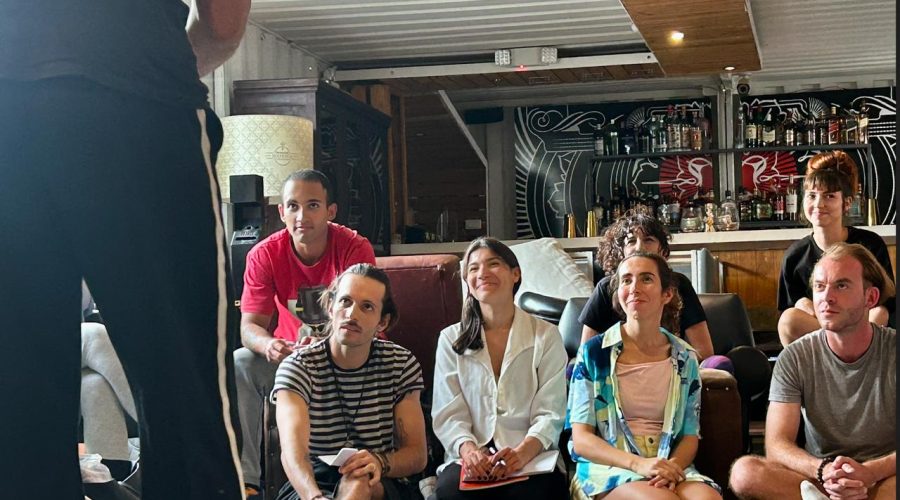
Visual content determines whether a curious browser stops to read your listing or scrolls past it. Photographs of actual workshop sessions showing participants engaged with materials outperform studio product shots consistently. Real people making real things in your real space communicates authenticity that no professionally staged photograph can replicate.
Practical information must be complete before a participant considers booking. Duration, maximum group size, age requirements, what to wear, what participants take home, and firing or finishing timelines for ceramics all reduce the hesitation that prevents bookings from completing. A participant who has to contact you to ask a basic practical question is a participant who may book elsewhere while waiting for your response.
Build Your Vendor Profile With the Same Care as Your Listings
Your vendor profile is the trust layer beneath your individual listings. Participants who discover one of your workshops will check your profile before booking, particularly for higher-priced or multi-session experiences.
A strong vendor profile communicates who you are, why you teach, and what gives you the authority to teach it. This does not require formal credentials or years of professional practice. It requires honesty and specificity. A ceramist who learned from their grandmother in a village in northern Portugal and has been teaching for three years has a more compelling story than a generic professional biography listing qualifications without personality.
Include your training background, years of practice, what draws you to your specific craft, and what you care most about in the workshop experience. The personality that emerges from a genuine vendor profile creates the trust that converts a browser into a booker more reliably than any credential list.
Use Reviews as Active Sales Tools
Positive reviews on Hands On function as the strongest conversion driver available to workshop teachers on the platform. A listing with ten genuine reviews from satisfied participants will consistently outperform an identical listing with no reviews, regardless of how well written the description is.
Reviews work because they transfer the decision risk from the potential participant to previous participants who already took that risk. Reading that someone else left your ceramics session with three finished pieces and a plan to continue practising removes the uncertainty that prevents first bookings.
Generate reviews actively rather than passively. Follow up with participants after collection of fired pieces, after workshop sessions, and when participants share photographs of their finished work. A brief, warm message asking whether they would consider leaving a review on the platform produces reviews that a generic automated email never will.
Respond to every review, positive and negative. Responses to positive reviews demonstrate that you engage with your community. Responses to negative reviews demonstrate that you take participant experience seriously enough to address concerns publicly. Both build the trust profile that converts undecided visitors into confirmed bookings.
Price With Intention
Pricing on Hands On signals quality as much as cost. Workshops priced significantly below comparable listings in the same category raise questions about quality rather than attracting budget participants. Workshops priced above the category average need visible justification through listing quality, review volume, and the specificity of what participants gain.
Consider what your workshop actually costs to deliver: materials, studio time or location hire, your teaching time, firing costs for ceramics, and the administrative time surrounding each session. Price from this floor upward based on the value participants receive rather than downward from what you assume the market will bear.
Introductory pricing for new listings makes sense when you have no reviews and need to generate initial bookings that produce the social proof required to support full pricing. Plan this explicitly: set a timeline for the introductory period and a clear price point you intend to move to once you have sufficient reviews to justify it.
Respond to Enquiries Faster Than You Think Necessary
Booking intent decays faster than most workshop teachers realise. A participant who sends an enquiry about availability, group size, or dietary accommodation is actively considering a booking at the moment they send the message. Every hour that passes without a response reduces the probability that they complete the booking.
Aim to respond to all platform enquiries within two to four hours during working hours. This does not require monitoring the platform constantly. A notification setup that alerts you to new messages and a clear system for responding during defined windows covers the practical requirement without creating constant interruption.
Template responses for common questions save time without sacrificing the personal quality that makes participants feel well cared for. A template that acknowledges the specific enquiry and adds a personal sentence performs better than either a generic automated response or a delayed personalised one.
Think Beyond Individual Sessions
Consistent sales on Hands On come from building a workshop presence rather than listing individual sessions. Teachers who offer multiple session formats, seasonal variations, private event options, and gift card availability generate more consistent revenue than those offering a single session type.
Consider what else your existing workshop participants might want. A participant who enjoyed a two-hour introduction to ceramics may want a longer session, a multi-week programme, or a private session for a friend group. A participant who loved your pastel de nata class may want your Portuguese cooking class. Surface these options clearly within your listings and vendor profile rather than leaving the next step undefined.
Gift card availability on Hands On captures purchase intent that workshop-specific listings cannot. Participants who want to give your workshop as a gift but cannot commit to a specific date convert through gift card purchase rather than abandoning the intention entirely. Participants who discover the platform through someone else’s gift card become your direct audience for future bookings.
Measure What Works and Adjust
Hands On provides listing performance data that most workshop teachers underuse. Views, click-through rates, and booking conversion metrics tell you which listings attract attention and which fail to convert that attention into bookings.
A listing with high views and low bookings has a description or pricing problem. A listing with low views has a title, category, or keyword problem. These are different problems requiring different solutions and treating them as the same produces changes that address neither.
Review your listing performance monthly during the first six months on the platform. Adjust titles, descriptions, and pricing based on what the data shows rather than intuition alone. Workshop teaching expertise and listing optimisation are separate skills. Developing both produces the consistent booking volume that makes independent workshop teaching genuinely sustainable in Portugal.
Frequently Asked Questions
How do I list my workshop on Hands On?
Create a vendor account on Hands On, complete your vendor profile with your background and teaching philosophy, then add your first workshop listing with a full description, practical details, pricing, and photographs. The platform guides you through each step of the listing process.
How much does it cost to list a workshop on Hands On?
Hands On operates on a commission model rather than a monthly subscription fee, meaning you pay only when you generate a booking. Check the current commission structure on the platform for exact percentages applicable to your workshop category.
What types of workshops can I sell on Hands On?
Hands On covers eight categories across Arts and Crafts, Food and Drinks, Home and DIY, Plants and Animals, Mind and Soul, Sports and Fitness, Music and Performance, and Photo and Video. If your workshop fits one of these categories and takes place in Portugal, it qualifies for listing.
How do payments work for workshop teachers on Hands On?
Hands On handles payment processing directly with participants and transfers earnings to workshop teachers after the session takes place. Payment timelines and transfer methods are confirmed in your vendor account setup.
How long does it take to start receiving bookings after listing?
New listings with complete descriptions, strong photographs, and competitive pricing typically receive their first bookings within two to four weeks. Listings with thin descriptions or no visual content take significantly longer to generate initial traction.
Can I offer private and group sessions on the same listing?
Yes, Hands On supports multiple session formats within a single workshop listing. You can offer both public group sessions and private event options, allowing participants to choose the format that suits their needs without requiring separate listings for each format.
What happens if a participant cancels their booking?
Cancellation policies are set at the platform level with options for teachers to apply standard terms. Review the cancellation policy options available in your vendor settings and select the terms that balance participant flexibility with your session planning needs.
How do I get my first reviews when I am new to the platform?
Run your first sessions, deliver excellent participant experiences, and follow up personally after each session asking participants to leave a review on the platform. Early reviews from genuine participants establish the social proof that drives subsequent bookings faster than any other single action.


 uk english
  pt portuguese

Pingback: Scaling Your Workshops Into a Full-Time Business - Hands on