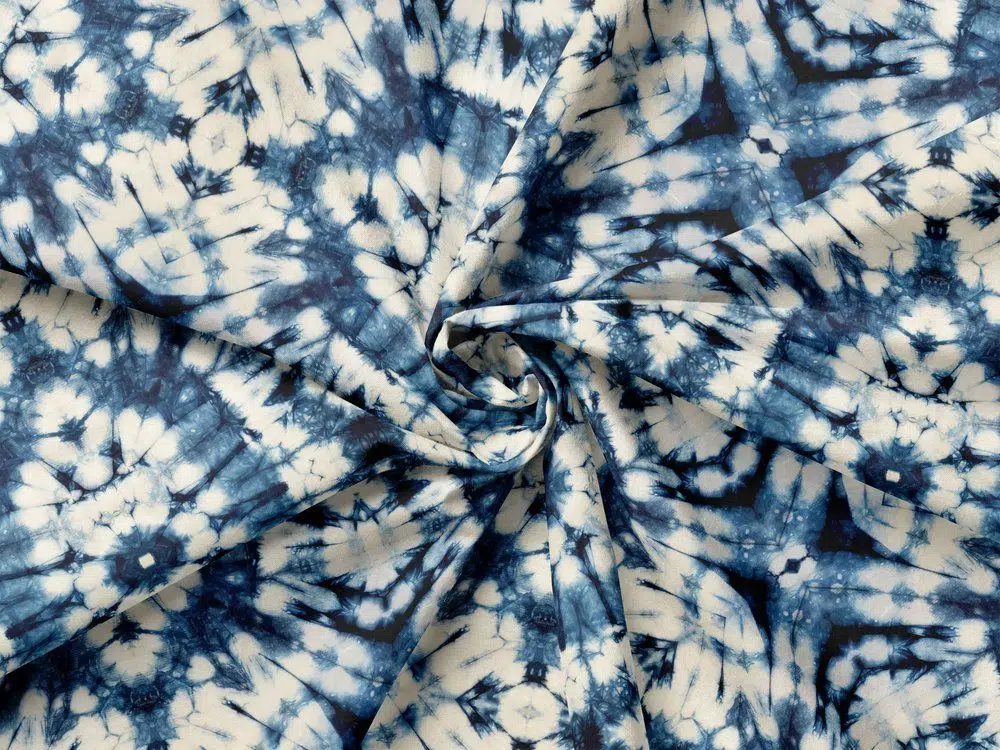
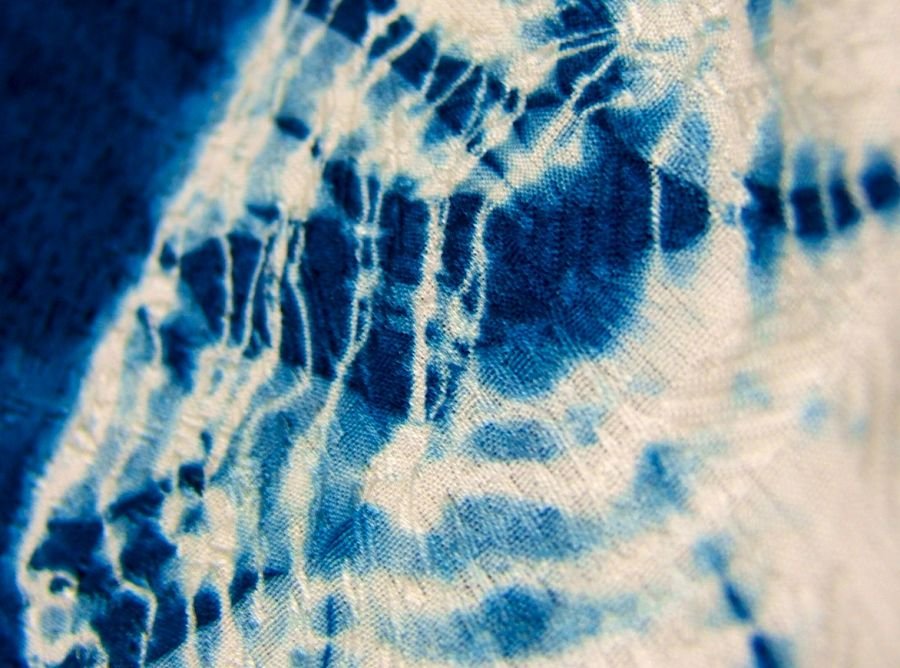
Nesta atividade, o participante aprenderá técnicas de torção para criar padrões geométricos que trarão vida a qualquer tecido. O shibori teve a sua origem no Japão, e surgiu por necessidade entre as classes menos privilegiadas, numa tentativa de embelezarem tecidos feitos de fibras como o cânhamo – a seda era apenas usada por nobres japoneses e o algodão era uma alternativa menos acessível para as massas. Os pigmentos utilizados neste workshop serão ecológicos, e ao participante será introduzido ao processo de tingimento de Índigo, para compreender as especificidades do mesmo e para poder replicar esse conhecimento de forma independente. A criatividade e curiosidade são elementos-chave para a participação neste workshop, que oferecerá ao participante uma infinidade de possibilidades de criação de padrões hipnotizantes. O Shibori tem a capacidade de trazer vida a qualquer tecido, e as possibilidades de criação são infinitas.
Objetivos da atividade
Breve História das Técnicas Shibori, Tie-dye e Índigo
Aplicar vários métodos de torção em amostras de tecido
Receita do Índigo • Cuidados a ter durante o banho e secagem
– Cada participante pode trazer uma peça de roupa usada que apresente manchas ou à qual queiram dar uma nova vida e que seja de uma cor clara e de tamanho pequeno, por exemplo: uma t-shirt ou top ou meias, para realizar o tingimento final.
*No final cada participante recebe as amostras que foram criadas.
Nota | Maiores de 14 anos. Materiais incluídos
Local | Eco Retiro de Galamares, Sintra
Formadora | Sara Florindo
EN
In this activity, participants will learn twisting techniques to create geometric patterns that will bring any fabric to life. Shibori originated in Japan and emerged out of necessity among less privileged communities, as a way of embellishing fabrics made from fibres such as hemp — silk was reserved for Japanese nobility, while cotton was a less accessible alternative for the masses. The pigments used in this workshop will be eco-friendly, and participants will be introduced to the Indigo dyeing process, learning about its specific requirements so that they can replicate the process independently. Creativity and curiosity are key elements for taking part in this workshop, which will offer participants endless possibilities for creating mesmerising patterns. Shibori has the ability to bring any fabric to life, and the creative possibilities are endless.
Activity Objectives
A Brief History of Shibori, Tie-Dye and Indigo Techniques
Apply various twisting methods to fabric samples
Indigo Recipe • Care to be taken during the dye bath and drying process
– Each participant may bring a used item of clothing that has stains or that they would like to give a new lease of life to. It should be light-coloured and small in size, for example, a T-shirt, top or socks, to carry out the final dyeing.
*At the end, each participant will receive the samples they created.
Note | Ages 14 and over. Materials included
Location | Eco Retiro de Galamares, Sintra
Instructor | Sara Florindo










 uk english
  pt portuguese